
Swedish National Hacking Team wins ECSC 2026
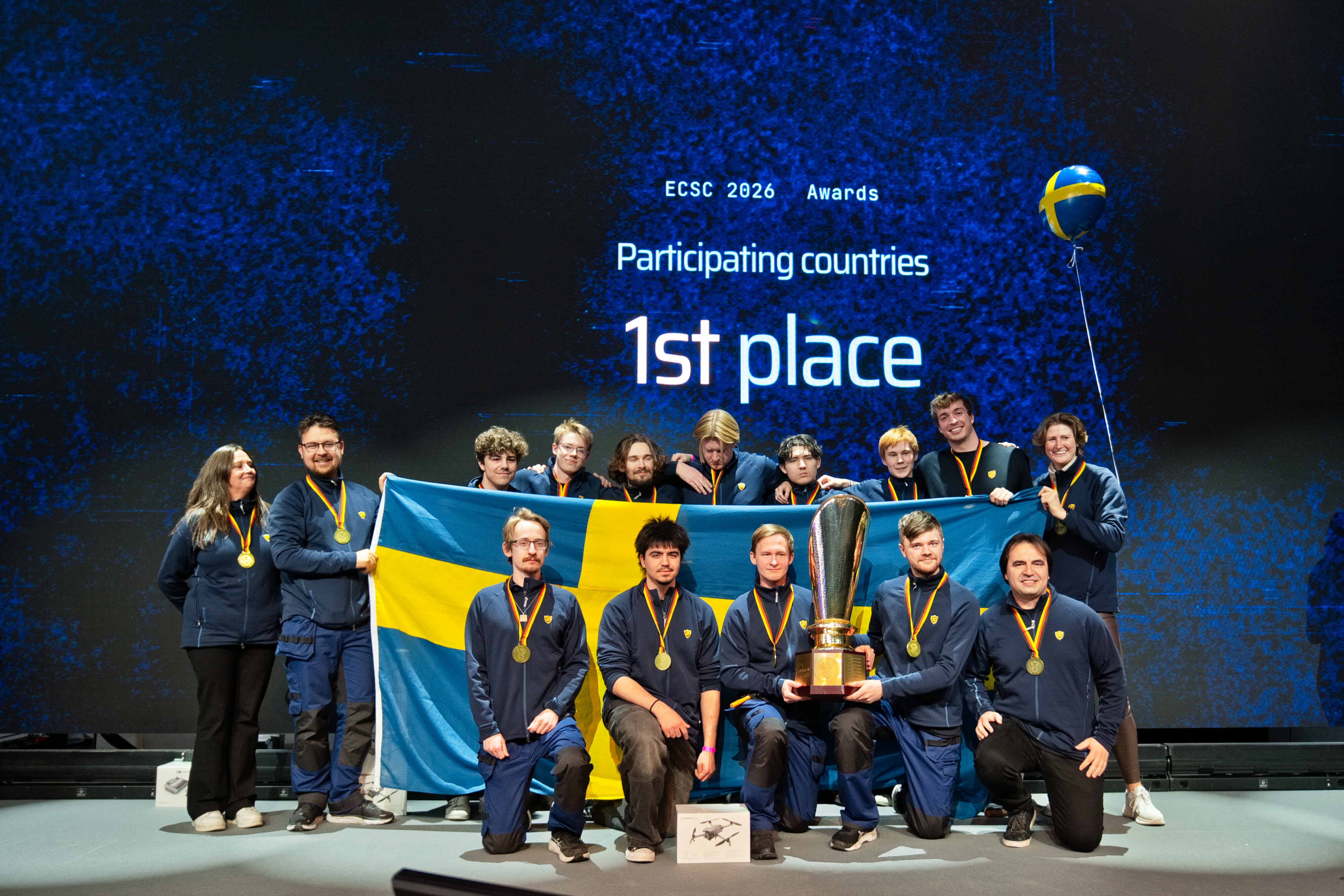
The Swedish National Hacking Team has won the European Cybersecurity Challenge (ECSC) 2026 in Bochum, Germany. The team took first place ahead of 41 other teams at Europe's largest competition for young cybersecurity talent. In 2028 the competition comes to Stockholm, and Cybercampus Sweden is leading the organisation of the event together with its members and partners.
The competition
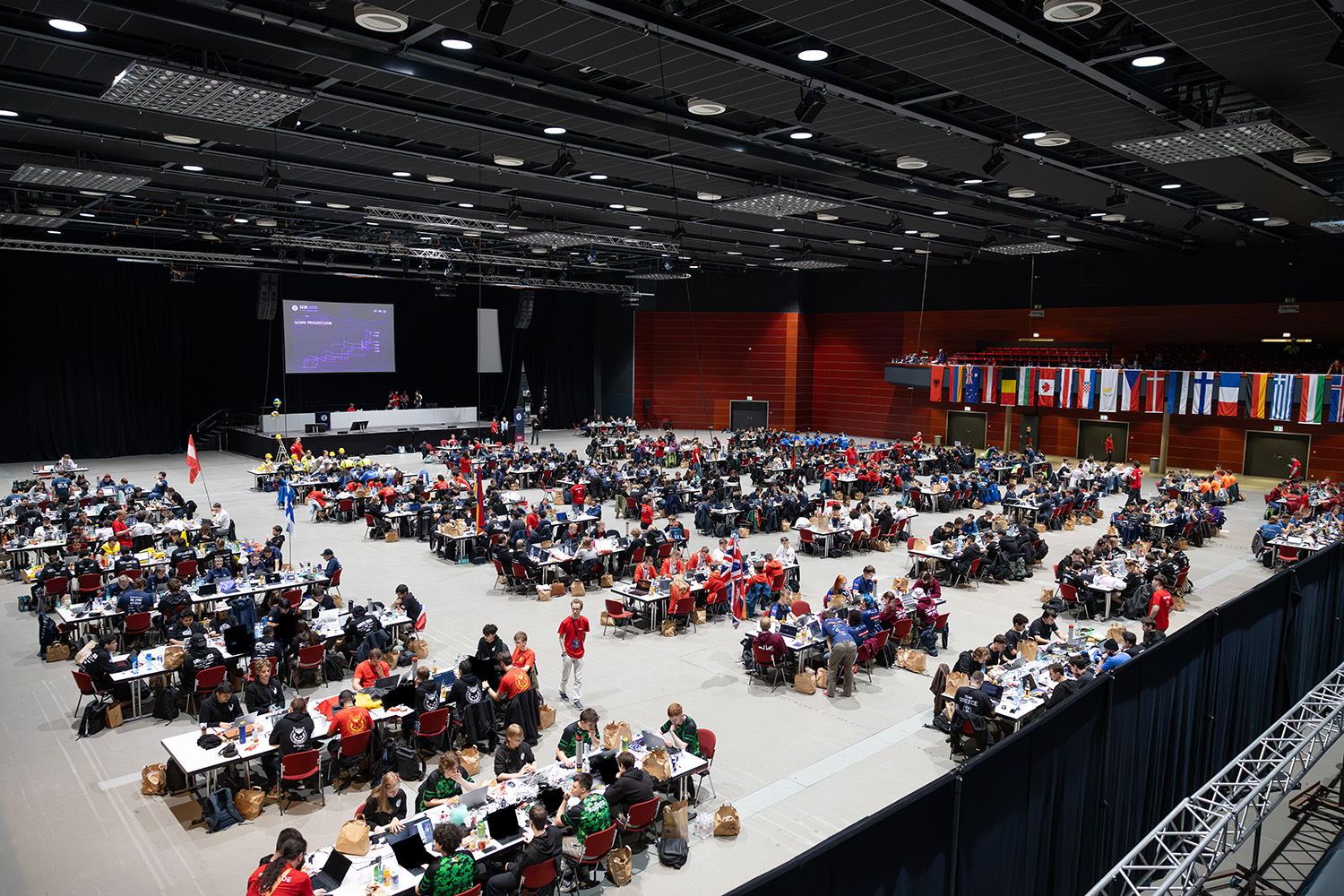
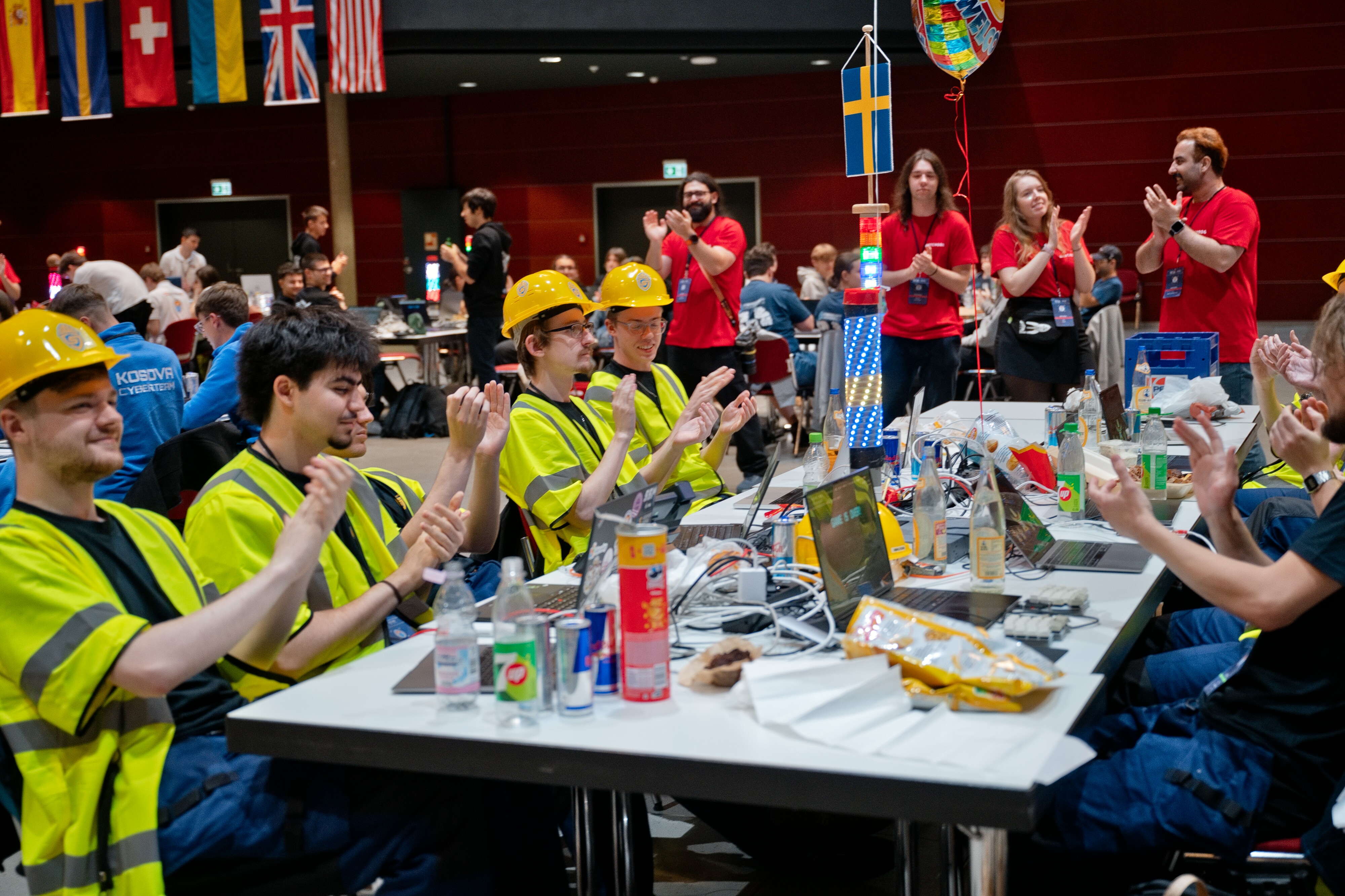
The competition ran over two days in two formats. On the first day, teams had twelve hours to solve challenges in areas such as cryptography, reverse engineering, web security and binary exploitation. On the second day, each team spent eight hours defending its own systems while attacking its opponents.
“What impressed me most was how the team stayed calm and kept working together even when the pressure was at its highest. Everyone contributed their specialist expertise, but it was the communication, the trust and the will to find solutions as a team that made the difference,” says Björn Seeliger, coach of the Swedish National Hacking Team.
Ten players aged 18 to 24
This year's team has ten players. Some study at KTH Royal Institute of Technology and Chalmers University of Technology, and others already work in the cybersecurity industry.
Players are selected through national qualifiers, boot camps and an annual final. In spring 2026, 50 young talents competed for a place on the team at Bosön outside Stockholm.
“SNHT has given me a community, friends and a network in cybersecurity. I started at 16 with Säkerhets-SM, and today I am 21 and work in the industry myself. SNHT has been an important part of that journey,” says Valter Wik, student at KTH and member of the Swedish National Hacking Team.
“The inspiring community, with incredibly driven and dedicated people, is what got me hooked and has taken me to the national team so quickly, in just two years,” says Allan Al-Salihi, first-year bachelor's student at KTH and new to the team this year.




Skills supply at the core of the mission
Demand for cybersecurity expertise is growing in both the public sector and industry, and EU requirements such as NIS2 and the Cyber Resilience Act add to that demand. Cybercampus Sweden's mission is to increase cybersecurity and strengthen society's defence capability and Swedish competitiveness. Securing the supply of skills is a key part of that work.
Cybercampus brings together more than 20 universities, government agencies and institutes, with KTH as host organisation, to deliver research, innovation and education beyond what any single organisation can achieve alone.
The Swedish National Hacking Team works the same way. It is a joint initiative of Cparta, KTH and Cybercampus, each contributing its own strengths. Cparta brings experience in organising competitions and training, KTH contributes academic expertise, and Cybercampus helps build Sweden's long-term cybersecurity capability.
“No single organisation can build on its own the cybersecurity talent that Sweden needs. By combining Cparta's experience with competitions, KTH's research and education, and Cybercampus Sweden's national network, we can find young talent early and give them a path into research, industry and public service,” says Musard Balliu, co-founder of the Swedish National Hacking Team and Associate Professor at KTH.
Competitions like ECSC give young people the chance to turn their interest in technology into practical problem-solving, while building experience and networks.
ECSC 2028 in Stockholm
Sweden will host ECSC 2028 in Stockholm. Cybercampus Sweden is leading the organisation of the event together with its members and partners.
“ECSC 2028 presents a unique opportunity to shine a spotlight on the importance of developing cybersecurity talent and to bring together some of Europe’s most talented young people in the field. It is also an honour to host this European final and celebrate the next generation of cybersecurity professionals,” says Carolin Sundberg, project lead for ECSC 2028 at Cybercampus Sweden and Sweden's deputy representative at ECSC.
“Making ECSC 2028 a success will require collaboration across Sweden’s cybersecurity community. We welcome companies, universities, public authorities and other relevant organisations to join us in delivering a successful event. By working together with the participating ECSC countries and stakeholders across Sweden, we can create a lasting impact on cybersecurity talent development across Europe.”
Organisations that want to contribute to ECSC 2028 are welcome to contact Cybercampus Sweden at cybercampus@cybercampus.se.